AdvancedFuelSystem (DashHook Support) 3.0.0



3 329
44
3 329
44
Advanced Fuel System AFS (AdvancedFuelSystem)
A physics-based fuel consumption engine that injects soul into GTA V — say goodbye to a simple fuel gauge and embrace realistic driving economics.
Compatible with: GTA V (Legacy & Enhanced)
Welcome to the most hardcore, humorous, and throttle‑conscious fuel system mod in GTA V. This is not a simple "refuel–consume" loop, but a complete driving experience that combines aeronautical engineering dynamics, automotive thermodynamics, brand mysticism, and Los Santos' unique economics.
[1. Realistic Physical Fuel Consumption — Floor it, and your wallet hits the floor]
Ground fuel vehicles (sedans, SUVs, sports cars): instantaneous fuel consumption is determined by idle, RPM, speed, and road gradient. Uphill climbs increase engine load, causing consumption to spike. Off‑road enthusiasts, beware — your fuel gauge may give out before your suspension does.
Helicopters: the higher the altitude, the thinner the air, reducing rotor efficiency and requiring more power to maintain flight, so higher altitude = higher consumption. Hovering is also a fuel guzzler – hover consumption is significantly higher than low‑speed forward flight. Try to maintain forward flight and avoid unnecessary climbs, or your fuel will vanish like a countdown.
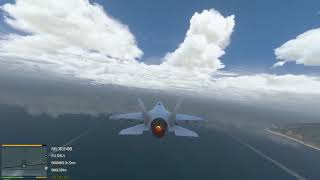
Fixed-wing jets: at high altitude, low air density reduces drag, giving the best cruise efficiency – the higher you fly, the more fuel you save. But once you engage full afterburner, consumption skyrockets exponentially – calculate your return fuel before you run.
Boats: sea waves cause the hull to constantly pitch, greatly increasing drag and fuel consumption. Want to speed through rough seas? Ask your fuel tank first.
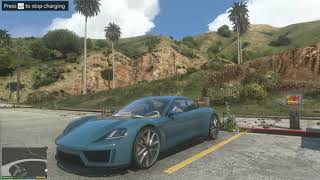
Electric vehicles: simulate regenerative braking, recovering a small amount of charge when coasting. However, high-speed cruising and climbing still drain the battery quickly; the HUD shows regeneration intensity in real time.
[2. Gas Station Brands — More Than Just a Sign]
Los Santos has four major fuel giants, each differing in price, quality, and refueling speed:
LTD: most expensive, but top-tier quality and fastest refueling – the choice for performance‑oriented drivers.
RON: moderate price, stable quality, decent refueling speed – safe bet for most daily drivers.
XERO GAS: cheap, slightly lower quality, slower refueling – for budget‑conscious citizens.
GLOBE OIL: cheapest in town, but lowest quality and slowest refueling – for the "it just needs to run" crowd.
Higher quality fuel makes the engine run smoother; cheaping out on fuel will eventually cost you.
[3. Fuel Quality and Stalling Risk — Your Car Is Pickier Than You Think]
Different vehicles have vastly different tolerance for fuel quality:
Supercars: extremely picky, must use high‑quality fuel (like LTD) consistently, or risk sudden power loss on the track – a plane can glide, you'll just coast awkwardly.
Open‑wheel race cars (like F1): even more sensitive than supercars, basically require top‑tier fuel, or they'll leave you stranded.
Sports cars and performance cars: fairly demanding, but can tolerate an occasional mid‑grade fill.
Off‑roaders and muscle cars: relatively forgiving, can run on slightly lower quality, but long‑term poor fuel will still cause issues.
Industrial and military vehicles: tough and tolerant, least picky – they're built for heavy work.
When you refuel, new fuel mixes with the remaining old fuel in the tank, dynamically changing overall quality. Sticking to the same brand stabilizes quality at that brand's level; frequent brand changes cause quality to fluctuate, upsetting the engine.
During driving, the engine continuously evaluates the risk of stalling based on current fuel quality and its own "sensitivity". Lower quality and more sensitive engines mean higher stall risk. If unlucky, the engine may cut out, requiring a short wait before restarting. Imagine you're flat‑out on the track and suddenly lose power – that's a beautiful disaster.
[4. Custom HUD — Every Vehicle Has Its Own Dashboard]
The mod offers three HUD display modes (text‑only, bar‑only, hybrid). Different vehicle types show different key data:
Fuel cars: instantaneous consumption, average consumption, remaining range, fuel quality (color‑coded red/yellow/green), stall risk warning.
Electric vehicles: instantaneous consumption, regeneration intensity percentage, range estimate.
Helicopters: power percentage (intuitive engine load display, very high during hover and climb), remaining range, flight time, flight state (ground/hover/cruise).
Fixed-wing aircraft: fuel flow, engine efficiency percentage (higher at altitude, more economical).
Boats: power percentage, range; wave impact on consumption is reflected in real time on the power bar.
[5. Daily Fuel Price Fluctuations — Fill Up Today or Tomorrow?]
Each in‑game day, oil prices fluctuate randomly, with a percentage change displayed. Savvy owners can wait for a low‑price day to refuel and save enough for a couple of snacks.
[6. Government Contracts — Fuel Covered by Los Santos, Provided You Leave Alive]
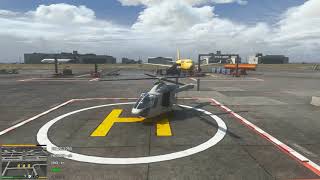
The helipads and runways at Fort Zancudo enjoy a Los Santos government contract – military fuel is completely free. Civilian aircraft and helicopters can also take advantage, but only if you can refuel and get out alive. The military base is a no‑fly zone; low‑level intrusion will instantly trigger a wanted level, and soldiers won't listen to reason.
[7. Fare Evasion – Fuel Companies Are Not to Be Messed With]
After refueling or charging, you must pay the bill within the allotted time. If you drive, sail, or fly away:
The fuel company will first send a polite reminder via SMS or on‑screen prompt.
If you still don't pay after the grace period, a random‑level wanted status will be triggered, and cops will chase you relentlessly.
If you really can't pay and decide to abandon the vehicle – the fuel company will send a mocking SMS, ridiculing your inability to afford fuel.
Sample taunts:
"You abandoned a helicopter just to save on AvGas? Did your rotor blades hit your head?"
"Running a fuel bill on a multi‑million‑dollar jet? Are you here to joke?"
"Your boat is now an artificial reef. Congratulations."
[8. Refueling Point Navigation – Gas Stations All Over the City]
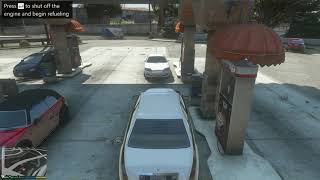
The mod comes with all refueling points, charging stations, helipads, fixed‑wing airfields, and marina berths across Los Santos (including the military base). When driving the corresponding vehicle, the map automatically shows the nearest supply point, with brands distinguished by color. Near a supply point, the screen shows the current fuel or electricity price and prompts ENTER to start refueling or charging. The vehicle automatically shuts off during refueling to prevent you from rolling away.
[9. Physical Formula Reference – Taking Every Drop Seriously]
The fuel consumption calculations in this mod are not fabricated; they reference common engineering knowledge:
Automotive engineering: engine universal characteristics, gradient resistance, air resistance, rolling resistance.
Aeronautical engineering: helicopter rotor power requirements (hover vs. forward flight, air density effects), jet engine thrust‑specific fuel consumption, high‑altitude cruise efficiency.
Naval engineering: resistance‑speed relationship, wave‑added resistance.
All formulas are simplified for real‑time computation, but the core trends match real physics intuition – more throttle = more fuel, uphill consumes more than flat ground, helicopters are most energy‑hungry at altitude and hover, jets are most economical at high altitude.
[10. Script Requirements]
ScriptHookV (http://www.dev-c.com/gta5/scripthookv)
dinput8 dll (provided with ScriptHookV)
ScriptHookVDotNet-v3.7.0 and above, or the Enhanced version SHVDNE (https://github.com/Chiheb-Bacha/scripthookvdotnetenhanced/releases)
.NET Framework 4.8 or higher
[11. Acknowledgements]
Special thanks to all the test pilots, veteran drivers, and boat captains who participated in the closed beta – your aggressive driving and ruthless fare-evasion tests made this mod both realistic and entertaining.
Enjoy the ride, and don't forget to pay your fuel bill. If you can't afford fuel, maybe it's time to ride a bicycle – they don't consume fuel, but don't ask me why.
AdvancedFuelSystem (AFS) v3.0.0 Changelog
Note: This version is a complete rewrite, not a patch on old code. The old FuelAndElectricSystem is no longer maintained. Future fixes, optimizations, and updates will be based on v3.0.0 (AFS). The following lists all feature changes and additions from the old version to the new one.
--Separate physics calculation logic for each vehicle type (cars/helicopters/planes/boats), with all models referencing common sense in respective engineering fields, closer to real driving experience.
--Full support for helicopters, including hover and high-altitude flight fuel consumption models (higher altitude = higher consumption, hover consumes significantly more than forward flight).
--Full support for fixed-wing aircraft, simulating high-altitude cruise efficiency and afterburner consumption (thin air at high altitude reduces drag, lowering cruise fuel burn; afterburner dramatically increases consumption).
--Full support for boats, accounting for wave-induced resistance affecting fuel consumption (waves increase drag, consumption changes dynamically with sea state).
--Independent electric vehicle consumption model with simulated regenerative braking effect.
--Optimized the original fuel vehicle consumption formula (introduced complete engine power detection for uphill/downhill gradients).
--Different content displayed by vehicle type: fuel cars show fuel consumption and fuel purity; EVs show power consumption and regeneration intensity; helicopters show power and flight status; planes show fuel flow and thrust efficiency; boats show power and range.
--First introduction of fuel purity – different brands have different fuel quality; fuel vehicles evaluate their own purity requirements based on their characteristics. If purity drops below requirements, it may cause temporary engine stall. When refueling, old and new fuel mix, dynamically changing purity.
--Added four major fuel brands (LTD/RON/XERO GAS/GLOBE OIL), each with different prices, quality, and supply speed. Gas station brands are distinguished on the map by different colors and names.
--Added daily random price fluctuation range with limits (to prevent extreme price spikes or crashes). Near a station, today's change percentage is displayed, allowing players to choose the best time to refuel.
--Refueling logic changed: refueling/charging costs money over time, pay after refueling. You may leave the vehicle during refueling without interrupting the process (vehicle automatically shuts off and remains stationary during supply to prevent movement).
--After refueling or charging, you must pay the bill within a specified time. If you drive away after refueling, the fuel company will send a reminder SMS and a warning; failure to pay in time triggers a random-level wanted level.
--Added taunts from fuel companies: if you abandon the vehicle after refueling to avoid payment, the company sends a mocking SMS.
--Military base (Fort Zancudo) provides government-contracted fuel free of charge, but beware of base defenses.
--Fuel level, fuel purity, battery level, average consumption, range, etc. for each vehicle are automatically saved to the config file and won't be lost after game restart.
--Fixed the issue where old version misidentified tank vehicles as electric vehicles.
--Fixed performance degradation caused by frequently switching vehicles.
A physics-based fuel consumption engine that injects soul into GTA V — say goodbye to a simple fuel gauge and embrace realistic driving economics.
Compatible with: GTA V (Legacy & Enhanced)
Welcome to the most hardcore, humorous, and throttle‑conscious fuel system mod in GTA V. This is not a simple "refuel–consume" loop, but a complete driving experience that combines aeronautical engineering dynamics, automotive thermodynamics, brand mysticism, and Los Santos' unique economics.
[1. Realistic Physical Fuel Consumption — Floor it, and your wallet hits the floor]
Ground fuel vehicles (sedans, SUVs, sports cars): instantaneous fuel consumption is determined by idle, RPM, speed, and road gradient. Uphill climbs increase engine load, causing consumption to spike. Off‑road enthusiasts, beware — your fuel gauge may give out before your suspension does.
Helicopters: the higher the altitude, the thinner the air, reducing rotor efficiency and requiring more power to maintain flight, so higher altitude = higher consumption. Hovering is also a fuel guzzler – hover consumption is significantly higher than low‑speed forward flight. Try to maintain forward flight and avoid unnecessary climbs, or your fuel will vanish like a countdown.
Fixed-wing jets: at high altitude, low air density reduces drag, giving the best cruise efficiency – the higher you fly, the more fuel you save. But once you engage full afterburner, consumption skyrockets exponentially – calculate your return fuel before you run.
Boats: sea waves cause the hull to constantly pitch, greatly increasing drag and fuel consumption. Want to speed through rough seas? Ask your fuel tank first.
Electric vehicles: simulate regenerative braking, recovering a small amount of charge when coasting. However, high-speed cruising and climbing still drain the battery quickly; the HUD shows regeneration intensity in real time.
[2. Gas Station Brands — More Than Just a Sign]
Los Santos has four major fuel giants, each differing in price, quality, and refueling speed:
LTD: most expensive, but top-tier quality and fastest refueling – the choice for performance‑oriented drivers.
RON: moderate price, stable quality, decent refueling speed – safe bet for most daily drivers.
XERO GAS: cheap, slightly lower quality, slower refueling – for budget‑conscious citizens.
GLOBE OIL: cheapest in town, but lowest quality and slowest refueling – for the "it just needs to run" crowd.
Higher quality fuel makes the engine run smoother; cheaping out on fuel will eventually cost you.
[3. Fuel Quality and Stalling Risk — Your Car Is Pickier Than You Think]
Different vehicles have vastly different tolerance for fuel quality:
Supercars: extremely picky, must use high‑quality fuel (like LTD) consistently, or risk sudden power loss on the track – a plane can glide, you'll just coast awkwardly.
Open‑wheel race cars (like F1): even more sensitive than supercars, basically require top‑tier fuel, or they'll leave you stranded.
Sports cars and performance cars: fairly demanding, but can tolerate an occasional mid‑grade fill.
Off‑roaders and muscle cars: relatively forgiving, can run on slightly lower quality, but long‑term poor fuel will still cause issues.
Industrial and military vehicles: tough and tolerant, least picky – they're built for heavy work.
When you refuel, new fuel mixes with the remaining old fuel in the tank, dynamically changing overall quality. Sticking to the same brand stabilizes quality at that brand's level; frequent brand changes cause quality to fluctuate, upsetting the engine.
During driving, the engine continuously evaluates the risk of stalling based on current fuel quality and its own "sensitivity". Lower quality and more sensitive engines mean higher stall risk. If unlucky, the engine may cut out, requiring a short wait before restarting. Imagine you're flat‑out on the track and suddenly lose power – that's a beautiful disaster.
[4. Custom HUD — Every Vehicle Has Its Own Dashboard]
The mod offers three HUD display modes (text‑only, bar‑only, hybrid). Different vehicle types show different key data:
Fuel cars: instantaneous consumption, average consumption, remaining range, fuel quality (color‑coded red/yellow/green), stall risk warning.
Electric vehicles: instantaneous consumption, regeneration intensity percentage, range estimate.
Helicopters: power percentage (intuitive engine load display, very high during hover and climb), remaining range, flight time, flight state (ground/hover/cruise).
Fixed-wing aircraft: fuel flow, engine efficiency percentage (higher at altitude, more economical).
Boats: power percentage, range; wave impact on consumption is reflected in real time on the power bar.
[5. Daily Fuel Price Fluctuations — Fill Up Today or Tomorrow?]
Each in‑game day, oil prices fluctuate randomly, with a percentage change displayed. Savvy owners can wait for a low‑price day to refuel and save enough for a couple of snacks.
[6. Government Contracts — Fuel Covered by Los Santos, Provided You Leave Alive]
The helipads and runways at Fort Zancudo enjoy a Los Santos government contract – military fuel is completely free. Civilian aircraft and helicopters can also take advantage, but only if you can refuel and get out alive. The military base is a no‑fly zone; low‑level intrusion will instantly trigger a wanted level, and soldiers won't listen to reason.
[7. Fare Evasion – Fuel Companies Are Not to Be Messed With]
After refueling or charging, you must pay the bill within the allotted time. If you drive, sail, or fly away:
The fuel company will first send a polite reminder via SMS or on‑screen prompt.
If you still don't pay after the grace period, a random‑level wanted status will be triggered, and cops will chase you relentlessly.
If you really can't pay and decide to abandon the vehicle – the fuel company will send a mocking SMS, ridiculing your inability to afford fuel.
Sample taunts:
"You abandoned a helicopter just to save on AvGas? Did your rotor blades hit your head?"
"Running a fuel bill on a multi‑million‑dollar jet? Are you here to joke?"
"Your boat is now an artificial reef. Congratulations."
[8. Refueling Point Navigation – Gas Stations All Over the City]
The mod comes with all refueling points, charging stations, helipads, fixed‑wing airfields, and marina berths across Los Santos (including the military base). When driving the corresponding vehicle, the map automatically shows the nearest supply point, with brands distinguished by color. Near a supply point, the screen shows the current fuel or electricity price and prompts ENTER to start refueling or charging. The vehicle automatically shuts off during refueling to prevent you from rolling away.
[9. Physical Formula Reference – Taking Every Drop Seriously]
The fuel consumption calculations in this mod are not fabricated; they reference common engineering knowledge:
Automotive engineering: engine universal characteristics, gradient resistance, air resistance, rolling resistance.
Aeronautical engineering: helicopter rotor power requirements (hover vs. forward flight, air density effects), jet engine thrust‑specific fuel consumption, high‑altitude cruise efficiency.
Naval engineering: resistance‑speed relationship, wave‑added resistance.
All formulas are simplified for real‑time computation, but the core trends match real physics intuition – more throttle = more fuel, uphill consumes more than flat ground, helicopters are most energy‑hungry at altitude and hover, jets are most economical at high altitude.
[10. Script Requirements]
ScriptHookV (http://www.dev-c.com/gta5/scripthookv)
dinput8 dll (provided with ScriptHookV)
ScriptHookVDotNet-v3.7.0 and above, or the Enhanced version SHVDNE (https://github.com/Chiheb-Bacha/scripthookvdotnetenhanced/releases)
.NET Framework 4.8 or higher
[11. Acknowledgements]
Special thanks to all the test pilots, veteran drivers, and boat captains who participated in the closed beta – your aggressive driving and ruthless fare-evasion tests made this mod both realistic and entertaining.
Enjoy the ride, and don't forget to pay your fuel bill. If you can't afford fuel, maybe it's time to ride a bicycle – they don't consume fuel, but don't ask me why.
AdvancedFuelSystem (AFS) v3.0.0 Changelog
Note: This version is a complete rewrite, not a patch on old code. The old FuelAndElectricSystem is no longer maintained. Future fixes, optimizations, and updates will be based on v3.0.0 (AFS). The following lists all feature changes and additions from the old version to the new one.
--Separate physics calculation logic for each vehicle type (cars/helicopters/planes/boats), with all models referencing common sense in respective engineering fields, closer to real driving experience.
--Full support for helicopters, including hover and high-altitude flight fuel consumption models (higher altitude = higher consumption, hover consumes significantly more than forward flight).
--Full support for fixed-wing aircraft, simulating high-altitude cruise efficiency and afterburner consumption (thin air at high altitude reduces drag, lowering cruise fuel burn; afterburner dramatically increases consumption).
--Full support for boats, accounting for wave-induced resistance affecting fuel consumption (waves increase drag, consumption changes dynamically with sea state).
--Independent electric vehicle consumption model with simulated regenerative braking effect.
--Optimized the original fuel vehicle consumption formula (introduced complete engine power detection for uphill/downhill gradients).
--Different content displayed by vehicle type: fuel cars show fuel consumption and fuel purity; EVs show power consumption and regeneration intensity; helicopters show power and flight status; planes show fuel flow and thrust efficiency; boats show power and range.
--First introduction of fuel purity – different brands have different fuel quality; fuel vehicles evaluate their own purity requirements based on their characteristics. If purity drops below requirements, it may cause temporary engine stall. When refueling, old and new fuel mix, dynamically changing purity.
--Added four major fuel brands (LTD/RON/XERO GAS/GLOBE OIL), each with different prices, quality, and supply speed. Gas station brands are distinguished on the map by different colors and names.
--Added daily random price fluctuation range with limits (to prevent extreme price spikes or crashes). Near a station, today's change percentage is displayed, allowing players to choose the best time to refuel.
--Refueling logic changed: refueling/charging costs money over time, pay after refueling. You may leave the vehicle during refueling without interrupting the process (vehicle automatically shuts off and remains stationary during supply to prevent movement).
--After refueling or charging, you must pay the bill within a specified time. If you drive away after refueling, the fuel company will send a reminder SMS and a warning; failure to pay in time triggers a random-level wanted level.
--Added taunts from fuel companies: if you abandon the vehicle after refueling to avoid payment, the company sends a mocking SMS.
--Military base (Fort Zancudo) provides government-contracted fuel free of charge, but beware of base defenses.
--Fuel level, fuel purity, battery level, average consumption, range, etc. for each vehicle are automatically saved to the config file and won't be lost after game restart.
--Fixed the issue where old version misidentified tank vehicles as electric vehicles.
--Fixed performance degradation caused by frequently switching vehicles.
Dodano: 3 stycznia 2026
Ostatnia aktualizacja: 1 dzień temu
Last Downloaded: 4 minuty temu
60 Komentarzy
More mods by 李斯特梦:

- .Net
- Pojazdy
5.0
1 319
14
3.0(Final)
By Lisztdreams
Advanced Fuel System AFS (AdvancedFuelSystem)
A physics-based fuel consumption engine that injects soul into GTA V — say goodbye to a simple fuel gauge and embrace realistic driving economics.
Compatible with: GTA V (Legacy & Enhanced)
Welcome to the most hardcore, humorous, and throttle‑conscious fuel system mod in GTA V. This is not a simple "refuel–consume" loop, but a complete driving experience that combines aeronautical engineering dynamics, automotive thermodynamics, brand mysticism, and Los Santos' unique economics.
[1. Realistic Physical Fuel Consumption — Floor it, and your wallet hits the floor]
Ground fuel vehicles (sedans, SUVs, sports cars): instantaneous fuel consumption is determined by idle, RPM, speed, and road gradient. Uphill climbs increase engine load, causing consumption to spike. Off‑road enthusiasts, beware — your fuel gauge may give out before your suspension does.
Helicopters: the higher the altitude, the thinner the air, reducing rotor efficiency and requiring more power to maintain flight, so higher altitude = higher consumption. Hovering is also a fuel guzzler – hover consumption is significantly higher than low‑speed forward flight. Try to maintain forward flight and avoid unnecessary climbs, or your fuel will vanish like a countdown.
Fixed-wing jets: at high altitude, low air density reduces drag, giving the best cruise efficiency – the higher you fly, the more fuel you save. But once you engage full afterburner, consumption skyrockets exponentially – calculate your return fuel before you run.
Boats: sea waves cause the hull to constantly pitch, greatly increasing drag and fuel consumption. Want to speed through rough seas? Ask your fuel tank first.
Electric vehicles: simulate regenerative braking, recovering a small amount of charge when coasting. However, high-speed cruising and climbing still drain the battery quickly; the HUD shows regeneration intensity in real time.
[2. Gas Station Brands — More Than Just a Sign]
Los Santos has four major fuel giants, each differing in price, quality, and refueling speed:
LTD: most expensive, but top-tier quality and fastest refueling – the choice for performance‑oriented drivers.
RON: moderate price, stable quality, decent refueling speed – safe bet for most daily drivers.
XERO GAS: cheap, slightly lower quality, slower refueling – for budget‑conscious citizens.
GLOBE OIL: cheapest in town, but lowest quality and slowest refueling – for the "it just needs to run" crowd.
Higher quality fuel makes the engine run smoother; cheaping out on fuel will eventually cost you.
[3. Fuel Quality and Stalling Risk — Your Car Is Pickier Than You Think]
Different vehicles have vastly different tolerance for fuel quality:
Supercars: extremely picky, must use high‑quality fuel (like LTD) consistently, or risk sudden power loss on the track – a plane can glide, you'll just coast awkwardly.
Open‑wheel race cars (like F1): even more sensitive than supercars, basically require top‑tier fuel, or they'll leave you stranded.
Sports cars and performance cars: fairly demanding, but can tolerate an occasional mid‑grade fill.
Off‑roaders and muscle cars: relatively forgiving, can run on slightly lower quality, but long‑term poor fuel will still cause issues.
Industrial and military vehicles: tough and tolerant, least picky – they're built for heavy work.
When you refuel, new fuel mixes with the remaining old fuel in the tank, dynamically changing overall quality. Sticking to the same brand stabilizes quality at that brand's level; frequent brand changes cause quality to fluctuate, upsetting the engine.
During driving, the engine continuously evaluates the risk of stalling based on current fuel quality and its own "sensitivity". Lower quality and more sensitive engines mean higher stall risk. If unlucky, the engine may cut out, requiring a short wait before restarting. Imagine you're flat‑out on the track and suddenly lose power – that's a beautiful disaster.
[4. Custom HUD — Every Vehicle Has Its Own Dashboard]
The mod offers three HUD display modes (text‑only, bar‑only, hybrid). Different vehicle types show different key data:
Fuel cars: instantaneous consumption, average consumption, remaining range, fuel quality (color‑coded red/yellow/green), stall risk warning.
Electric vehicles: instantaneous consumption, regeneration intensity percentage, range estimate.
Helicopters: power percentage (intuitive engine load display, very high during hover and climb), remaining range, flight time, flight state (ground/hover/cruise).
Fixed-wing aircraft: fuel flow, engine efficiency percentage (higher at altitude, more economical).
Boats: power percentage, range; wave impact on consumption is reflected in real time on the power bar.
[5. Daily Fuel Price Fluctuations — Fill Up Today or Tomorrow?]
Each in‑game day, oil prices fluctuate randomly, with a percentage change displayed. Savvy owners can wait for a low‑price day to refuel and save enough for a couple of snacks.
[6. Government Contracts — Fuel Covered by Los Santos, Provided You Leave Alive]
The helipads and runways at Fort Zancudo enjoy a Los Santos government contract – military fuel is completely free. Civilian aircraft and helicopters can also take advantage, but only if you can refuel and get out alive. The military base is a no‑fly zone; low‑level intrusion will instantly trigger a wanted level, and soldiers won't listen to reason.
[7. Fare Evasion – Fuel Companies Are Not to Be Messed With]
After refueling or charging, you must pay the bill within the allotted time. If you drive, sail, or fly away:
The fuel company will first send a polite reminder via SMS or on‑screen prompt.
If you still don't pay after the grace period, a random‑level wanted status will be triggered, and cops will chase you relentlessly.
If you really can't pay and decide to abandon the vehicle – the fuel company will send a mocking SMS, ridiculing your inability to afford fuel.
Sample taunts:
"You abandoned a helicopter just to save on AvGas? Did your rotor blades hit your head?"
"Running a fuel bill on a multi‑million‑dollar jet? Are you here to joke?"
"Your boat is now an artificial reef. Congratulations."
[8. Refueling Point Navigation – Gas Stations All Over the City]
The mod comes with all refueling points, charging stations, helipads, fixed‑wing airfields, and marina berths across Los Santos (including the military base). When driving the corresponding vehicle, the map automatically shows the nearest supply point, with brands distinguished by color. Near a supply point, the screen shows the current fuel or electricity price and prompts ENTER to start refueling or charging. The vehicle automatically shuts off during refueling to prevent you from rolling away.
[9. Physical Formula Reference – Taking Every Drop Seriously]
The fuel consumption calculations in this mod are not fabricated; they reference common engineering knowledge:
Automotive engineering: engine universal characteristics, gradient resistance, air resistance, rolling resistance.
Aeronautical engineering: helicopter rotor power requirements (hover vs. forward flight, air density effects), jet engine thrust‑specific fuel consumption, high‑altitude cruise efficiency.
Naval engineering: resistance‑speed relationship, wave‑added resistance.
All formulas are simplified for real‑time computation, but the core trends match real physics intuition – more throttle = more fuel, uphill consumes more than flat ground, helicopters are most energy‑hungry at altitude and hover, jets are most economical at high altitude.
[10. Script Requirements]
ScriptHookV (http://www.dev-c.com/gta5/scripthookv)
dinput8 dll (provided with ScriptHookV)
ScriptHookVDotNet-v3.7.0 and above, or the Enhanced version SHVDNE (https://github.com/Chiheb-Bacha/scripthookvdotnetenhanced/releases)
.NET Framework 4.8 or higher
[11. Acknowledgements]
Special thanks to all the test pilots, veteran drivers, and boat captains who participated in the closed beta – your aggressive driving and ruthless fare-evasion tests made this mod both realistic and entertaining.
Enjoy the ride, and don't forget to pay your fuel bill. If you can't afford fuel, maybe it's time to ride a bicycle – they don't consume fuel, but don't ask me why.
AdvancedFuelSystem (AFS) v3.0.0 Changelog
Note: This version is a complete rewrite, not a patch on old code. The old FuelAndElectricSystem is no longer maintained. Future fixes, optimizations, and updates will be based on v3.0.0 (AFS). The following lists all feature changes and additions from the old version to the new one.
--Separate physics calculation logic for each vehicle type (cars/helicopters/planes/boats), with all models referencing common sense in respective engineering fields, closer to real driving experience.
--Full support for helicopters, including hover and high-altitude flight fuel consumption models (higher altitude = higher consumption, hover consumes significantly more than forward flight).
--Full support for fixed-wing aircraft, simulating high-altitude cruise efficiency and afterburner consumption (thin air at high altitude reduces drag, lowering cruise fuel burn; afterburner dramatically increases consumption).
--Full support for boats, accounting for wave-induced resistance affecting fuel consumption (waves increase drag, consumption changes dynamically with sea state).
--Independent electric vehicle consumption model with simulated regenerative braking effect.
--Optimized the original fuel vehicle consumption formula (introduced complete engine power detection for uphill/downhill gradients).
--Different content displayed by vehicle type: fuel cars show fuel consumption and fuel purity; EVs show power consumption and regeneration intensity; helicopters show power and flight status; planes show fuel flow and thrust efficiency; boats show power and range.
--First introduction of fuel purity – different brands have different fuel quality; fuel vehicles evaluate their own purity requirements based on their characteristics. If purity drops below requirements, it may cause temporary engine stall. When refueling, old and new fuel mix, dynamically changing purity.
--Added four major fuel brands (LTD/RON/XERO GAS/GLOBE OIL), each with different prices, quality, and supply speed. Gas station brands are distinguished on the map by different colors and names.
--Added daily random price fluctuation range with limits (to prevent extreme price spikes or crashes). Near a station, today's change percentage is displayed, allowing players to choose the best time to refuel.
--Refueling logic changed: refueling/charging costs money over time, pay after refueling. You may leave the vehicle during refueling without interrupting the process (vehicle automatically shuts off and remains stationary during supply to prevent movement).
--After refueling or charging, you must pay the bill within a specified time. If you drive away after refueling, the fuel company will send a reminder SMS and a warning; failure to pay in time triggers a random-level wanted level.
--Added taunts from fuel companies: if you abandon the vehicle after refueling to avoid payment, the company sends a mocking SMS.
--Military base (Fort Zancudo) provides government-contracted fuel free of charge, but beware of base defenses.
--Fuel level, fuel purity, battery level, average consumption, range, etc. for each vehicle are automatically saved to the config file and won't be lost after game restart.
--Fixed the issue where old version misidentified tank vehicles as electric vehicles.
--Fixed performance degradation caused by frequently switching vehicles.
A physics-based fuel consumption engine that injects soul into GTA V — say goodbye to a simple fuel gauge and embrace realistic driving economics.
Compatible with: GTA V (Legacy & Enhanced)
Welcome to the most hardcore, humorous, and throttle‑conscious fuel system mod in GTA V. This is not a simple "refuel–consume" loop, but a complete driving experience that combines aeronautical engineering dynamics, automotive thermodynamics, brand mysticism, and Los Santos' unique economics.
[1. Realistic Physical Fuel Consumption — Floor it, and your wallet hits the floor]
Ground fuel vehicles (sedans, SUVs, sports cars): instantaneous fuel consumption is determined by idle, RPM, speed, and road gradient. Uphill climbs increase engine load, causing consumption to spike. Off‑road enthusiasts, beware — your fuel gauge may give out before your suspension does.
Helicopters: the higher the altitude, the thinner the air, reducing rotor efficiency and requiring more power to maintain flight, so higher altitude = higher consumption. Hovering is also a fuel guzzler – hover consumption is significantly higher than low‑speed forward flight. Try to maintain forward flight and avoid unnecessary climbs, or your fuel will vanish like a countdown.
Fixed-wing jets: at high altitude, low air density reduces drag, giving the best cruise efficiency – the higher you fly, the more fuel you save. But once you engage full afterburner, consumption skyrockets exponentially – calculate your return fuel before you run.
Boats: sea waves cause the hull to constantly pitch, greatly increasing drag and fuel consumption. Want to speed through rough seas? Ask your fuel tank first.
Electric vehicles: simulate regenerative braking, recovering a small amount of charge when coasting. However, high-speed cruising and climbing still drain the battery quickly; the HUD shows regeneration intensity in real time.
[2. Gas Station Brands — More Than Just a Sign]
Los Santos has four major fuel giants, each differing in price, quality, and refueling speed:
LTD: most expensive, but top-tier quality and fastest refueling – the choice for performance‑oriented drivers.
RON: moderate price, stable quality, decent refueling speed – safe bet for most daily drivers.
XERO GAS: cheap, slightly lower quality, slower refueling – for budget‑conscious citizens.
GLOBE OIL: cheapest in town, but lowest quality and slowest refueling – for the "it just needs to run" crowd.
Higher quality fuel makes the engine run smoother; cheaping out on fuel will eventually cost you.
[3. Fuel Quality and Stalling Risk — Your Car Is Pickier Than You Think]
Different vehicles have vastly different tolerance for fuel quality:
Supercars: extremely picky, must use high‑quality fuel (like LTD) consistently, or risk sudden power loss on the track – a plane can glide, you'll just coast awkwardly.
Open‑wheel race cars (like F1): even more sensitive than supercars, basically require top‑tier fuel, or they'll leave you stranded.
Sports cars and performance cars: fairly demanding, but can tolerate an occasional mid‑grade fill.
Off‑roaders and muscle cars: relatively forgiving, can run on slightly lower quality, but long‑term poor fuel will still cause issues.
Industrial and military vehicles: tough and tolerant, least picky – they're built for heavy work.
When you refuel, new fuel mixes with the remaining old fuel in the tank, dynamically changing overall quality. Sticking to the same brand stabilizes quality at that brand's level; frequent brand changes cause quality to fluctuate, upsetting the engine.
During driving, the engine continuously evaluates the risk of stalling based on current fuel quality and its own "sensitivity". Lower quality and more sensitive engines mean higher stall risk. If unlucky, the engine may cut out, requiring a short wait before restarting. Imagine you're flat‑out on the track and suddenly lose power – that's a beautiful disaster.
[4. Custom HUD — Every Vehicle Has Its Own Dashboard]
The mod offers three HUD display modes (text‑only, bar‑only, hybrid). Different vehicle types show different key data:
Fuel cars: instantaneous consumption, average consumption, remaining range, fuel quality (color‑coded red/yellow/green), stall risk warning.
Electric vehicles: instantaneous consumption, regeneration intensity percentage, range estimate.
Helicopters: power percentage (intuitive engine load display, very high during hover and climb), remaining range, flight time, flight state (ground/hover/cruise).
Fixed-wing aircraft: fuel flow, engine efficiency percentage (higher at altitude, more economical).
Boats: power percentage, range; wave impact on consumption is reflected in real time on the power bar.
[5. Daily Fuel Price Fluctuations — Fill Up Today or Tomorrow?]
Each in‑game day, oil prices fluctuate randomly, with a percentage change displayed. Savvy owners can wait for a low‑price day to refuel and save enough for a couple of snacks.
[6. Government Contracts — Fuel Covered by Los Santos, Provided You Leave Alive]
The helipads and runways at Fort Zancudo enjoy a Los Santos government contract – military fuel is completely free. Civilian aircraft and helicopters can also take advantage, but only if you can refuel and get out alive. The military base is a no‑fly zone; low‑level intrusion will instantly trigger a wanted level, and soldiers won't listen to reason.
[7. Fare Evasion – Fuel Companies Are Not to Be Messed With]
After refueling or charging, you must pay the bill within the allotted time. If you drive, sail, or fly away:
The fuel company will first send a polite reminder via SMS or on‑screen prompt.
If you still don't pay after the grace period, a random‑level wanted status will be triggered, and cops will chase you relentlessly.
If you really can't pay and decide to abandon the vehicle – the fuel company will send a mocking SMS, ridiculing your inability to afford fuel.
Sample taunts:
"You abandoned a helicopter just to save on AvGas? Did your rotor blades hit your head?"
"Running a fuel bill on a multi‑million‑dollar jet? Are you here to joke?"
"Your boat is now an artificial reef. Congratulations."
[8. Refueling Point Navigation – Gas Stations All Over the City]
The mod comes with all refueling points, charging stations, helipads, fixed‑wing airfields, and marina berths across Los Santos (including the military base). When driving the corresponding vehicle, the map automatically shows the nearest supply point, with brands distinguished by color. Near a supply point, the screen shows the current fuel or electricity price and prompts ENTER to start refueling or charging. The vehicle automatically shuts off during refueling to prevent you from rolling away.
[9. Physical Formula Reference – Taking Every Drop Seriously]
The fuel consumption calculations in this mod are not fabricated; they reference common engineering knowledge:
Automotive engineering: engine universal characteristics, gradient resistance, air resistance, rolling resistance.
Aeronautical engineering: helicopter rotor power requirements (hover vs. forward flight, air density effects), jet engine thrust‑specific fuel consumption, high‑altitude cruise efficiency.
Naval engineering: resistance‑speed relationship, wave‑added resistance.
All formulas are simplified for real‑time computation, but the core trends match real physics intuition – more throttle = more fuel, uphill consumes more than flat ground, helicopters are most energy‑hungry at altitude and hover, jets are most economical at high altitude.
[10. Script Requirements]
ScriptHookV (http://www.dev-c.com/gta5/scripthookv)
dinput8 dll (provided with ScriptHookV)
ScriptHookVDotNet-v3.7.0 and above, or the Enhanced version SHVDNE (https://github.com/Chiheb-Bacha/scripthookvdotnetenhanced/releases)
.NET Framework 4.8 or higher
[11. Acknowledgements]
Special thanks to all the test pilots, veteran drivers, and boat captains who participated in the closed beta – your aggressive driving and ruthless fare-evasion tests made this mod both realistic and entertaining.
Enjoy the ride, and don't forget to pay your fuel bill. If you can't afford fuel, maybe it's time to ride a bicycle – they don't consume fuel, but don't ask me why.
AdvancedFuelSystem (AFS) v3.0.0 Changelog
Note: This version is a complete rewrite, not a patch on old code. The old FuelAndElectricSystem is no longer maintained. Future fixes, optimizations, and updates will be based on v3.0.0 (AFS). The following lists all feature changes and additions from the old version to the new one.
--Separate physics calculation logic for each vehicle type (cars/helicopters/planes/boats), with all models referencing common sense in respective engineering fields, closer to real driving experience.
--Full support for helicopters, including hover and high-altitude flight fuel consumption models (higher altitude = higher consumption, hover consumes significantly more than forward flight).
--Full support for fixed-wing aircraft, simulating high-altitude cruise efficiency and afterburner consumption (thin air at high altitude reduces drag, lowering cruise fuel burn; afterburner dramatically increases consumption).
--Full support for boats, accounting for wave-induced resistance affecting fuel consumption (waves increase drag, consumption changes dynamically with sea state).
--Independent electric vehicle consumption model with simulated regenerative braking effect.
--Optimized the original fuel vehicle consumption formula (introduced complete engine power detection for uphill/downhill gradients).
--Different content displayed by vehicle type: fuel cars show fuel consumption and fuel purity; EVs show power consumption and regeneration intensity; helicopters show power and flight status; planes show fuel flow and thrust efficiency; boats show power and range.
--First introduction of fuel purity – different brands have different fuel quality; fuel vehicles evaluate their own purity requirements based on their characteristics. If purity drops below requirements, it may cause temporary engine stall. When refueling, old and new fuel mix, dynamically changing purity.
--Added four major fuel brands (LTD/RON/XERO GAS/GLOBE OIL), each with different prices, quality, and supply speed. Gas station brands are distinguished on the map by different colors and names.
--Added daily random price fluctuation range with limits (to prevent extreme price spikes or crashes). Near a station, today's change percentage is displayed, allowing players to choose the best time to refuel.
--Refueling logic changed: refueling/charging costs money over time, pay after refueling. You may leave the vehicle during refueling without interrupting the process (vehicle automatically shuts off and remains stationary during supply to prevent movement).
--After refueling or charging, you must pay the bill within a specified time. If you drive away after refueling, the fuel company will send a reminder SMS and a warning; failure to pay in time triggers a random-level wanted level.
--Added taunts from fuel companies: if you abandon the vehicle after refueling to avoid payment, the company sends a mocking SMS.
--Military base (Fort Zancudo) provides government-contracted fuel free of charge, but beware of base defenses.
--Fuel level, fuel purity, battery level, average consumption, range, etc. for each vehicle are automatically saved to the config file and won't be lost after game restart.
--Fixed the issue where old version misidentified tank vehicles as electric vehicles.
--Fixed performance degradation caused by frequently switching vehicles.
Dodano: 3 stycznia 2026
Ostatnia aktualizacja: 1 dzień temu
Last Downloaded: 4 minuty temu
 5mods on Discord

Note: Regarding the v3.0.0 version, the configuration file will be generated as an INI file in the same path when the script runs for the first time, allowing custom parameter settings. If you are unclear about the meaning of the configuration file, you can find the README.txt file in the downloaded script archive, which contains detailed explanations and format references at the bottom. Also, when using v3.0.0, you need to delete the old FES script and its corresponding configuration files to avoid unnecessary performance overhead. Additionally, if you do not use the DashHook script, it will not affect the script's operation; it will only mean that you cannot see the correct fuel gauge pointer and low fuel warning light on the vehicle dashboard.
@Nutry Many people have been giving feedback that they hope to adjust the custom fuel consumption rate of individual vehicles, so I will most likely provide a custom configuration feature in a future new version.
@Trancenath91 Were you able to use the previous version normally? If only this version is causing the game to crash, that would be strange, because the basic framework of the script hasn't changed at all. That sounds unfortunate. However, I will update to a more complete version in the future. You can wait and see. Thanks for your support.
I discover what it was probably some problem on my part for having old hardware, but I needed to wait like 20 seconds before I loaded into a world to get into a car the first time and create the ini without crashing.
*After sorry, but it's an awesome mod.
@Lisztdreams Nice mod bro and can you give me an example format for creating custom gas stations
@TroopahGaming Sure, like [ChargingStations]
-51,-1762,28
-53,-1764,28
-57,-1743,28
and [FuelStations]
-64,-2530,5
-67,-1760,29
173,-1560,28
@Trancenath91 I'm very sorry. Because the fuel script's computational content is inherently larger and more complex than other typical mods, I will do my best to optimize performance in future updates. Thank you for your appreciation.😭
@Lisztdreams Thanks bro
bro in my script they are not detecting the charging station they are just detecting fuel pumps please help
Awesome mod! But one thing I notice is when you reload the scripts, the "Jerry Can" Blips on the map duplicate by 2. For example, First launch of the game, the amount is the normal 28. But when I reload ScriptHookVDotNet, it goes to 56, and so forth with reloading manually.
@skipper00123 @Trancenath91 @TroopahGaming @PrimeMuffy @SouljaFlight I recommend using my completely refactored version 3.0.0, which adds support and content for more types of vehicles. At the same time, I will no longer maintain or update the old FES script. Thanks for your support.
@Lisztdreams Nice bro and appreciate the update
how do you get it to say miles/gallons
im not sure if i did it right but i loaded the game and it didnt work
Even planes, cool!
@Lisztdreams how do i make the hud on the top left come down and put it on the right side of the map bottom left? like the discription viseo?
@Lilacepope23 The script already has built-in functionality. You can directly find the ini configuration file generated when the script first runs in the script's corresponding path, where you can set it, including HUD text and fuel bar size. After saving the settings, press the default F5 in-game to refresh the configuration file.
@Rinmaru2002 You can download the latest version of SHVDNE to test the results. It might be a compatibility issue with some older versions of SHVDN. The download link is https://github.com/Chiheb-Bacha/scripthookvdotnetenhanced/releases
@blackout0039 I may provide custom options in the new version for using US or UK format display. Thank you for your five-star rating.